
Understanding Stellest Lenses and How They Help Control Myopia in Children
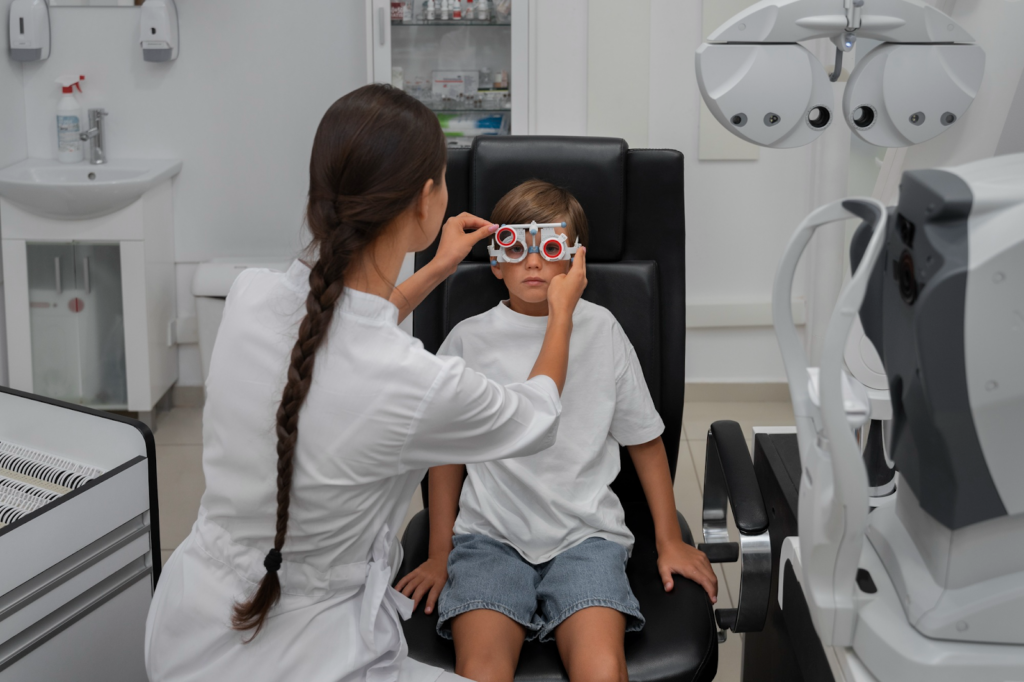

Myopia is now being considered a global public health concern, particularly among children. According to studies, it affects more than 5% of preschoolers and about 9% of school-aged children. The figures are increasing at an alarming rate, with researchers believing that around 740 million children and teenagers could be myopic by 2050.
If left untreated, myopia can lead to serious eye problems later in life. As a parent, you want to do everything you can to slow down the progression of myopia. This is where Stellest lenses come in!
These lenses not only correct vision, but can also help control myopia in children. Let’s take a closer look.

History of Stellest Lenses
Essilor Stellest lenses are a new type of corrective lens designed for children with myopia. The first clinical trial for Stellest lenses began in 2018 and was released in key countries the same year. In 2020, the technology was launched in countries like China, Russia, and Singapore.
On September 25, 2025, the Food and Drug Administration (FDA) approved the marketing of Stellest lenses in the United States. The lenses were authorized for children aged 6 to 12 years old at the start of treatment.
What are Stellest Lenses
Prior to Stellest lenses, there was only one approved device for controlling myopia in children — contact lenses, that too, for children aged 8 to 12 years old. The Essilor Stellest lenses are beneficial for children aged 6 to 7 years old and for those who cannot wear contact lenses.
They look and feel just like regular lenses, but have unique features, such as the ability to focus light on the retina. Stellest lenses are typically made from polycarbonate. It is a strong, durable material that ensures comfort for your child.
How Stellest Lenses Control Myopia Progression
Here’s a brief breakdown of how Stellest lenses control or slow down the progression of myopia in children:
H.A.L.T Technology
The Essilor Stellest lenses use the Highly Aspherical Lenslet Target (HALT) technology. The lenses have a unique structure with a clear central vision zone and a surrounding peripheral area. The surrounding area contains 1,021 invisible lenslets in 11 concentric rings.
These are little focus points that send special signals to your child’s eyes. These signals slow down the eye’s tendency to become more nearsighted over time.
Light Manipulation
As mentioned earlier, the lenslets create a volume of signal that acts as a shield against worsening myopia.
Slowing Eye Growth
Standard lenses correct blurred vision, but they also make the eye grow longer. In comparison, Stellest lenses shift peripheral light to focus in front of the retina. This sends a signal to the eye to stop growing excessively.
Clinical Effectiveness of Stellest Lenses: What the Statistics Say
The Food and Drug Administration (FDA) evaluated two years of research and clinical trials before approving the marketing of Stellest lenses. One study showed a 71% reduction in myopia progression after continuous usage for 2 years. Moreover, another clinical trial showed a 53% reduction in eye elongation at 24 months.

 First-Timer’s Guide to Visiting a Dispensary: What to Expect
  The Ultimate Guide to Effective Home Workouts: Staying Fit and Healthy
  Understanding Stellest Lenses and How They Help Control Myopia in Children
  How to Choose the Perfect New Home in the Houston Area
  Practical Tips for Building a Strong Hybrid Work Culture in Your Company